
Ten AI tools built for how security is actually sold.
Every tool is built on the SST method: trigger-led outreach, a hypothesis before the first meeting, the buyer’s own words, and a design the buyer agrees to before price. Each one does a specific job a rep does every week, in minutes, and pairs with the course that teaches it.
Know whether to bid, and how to win, before you’ve finished reading the RFP.
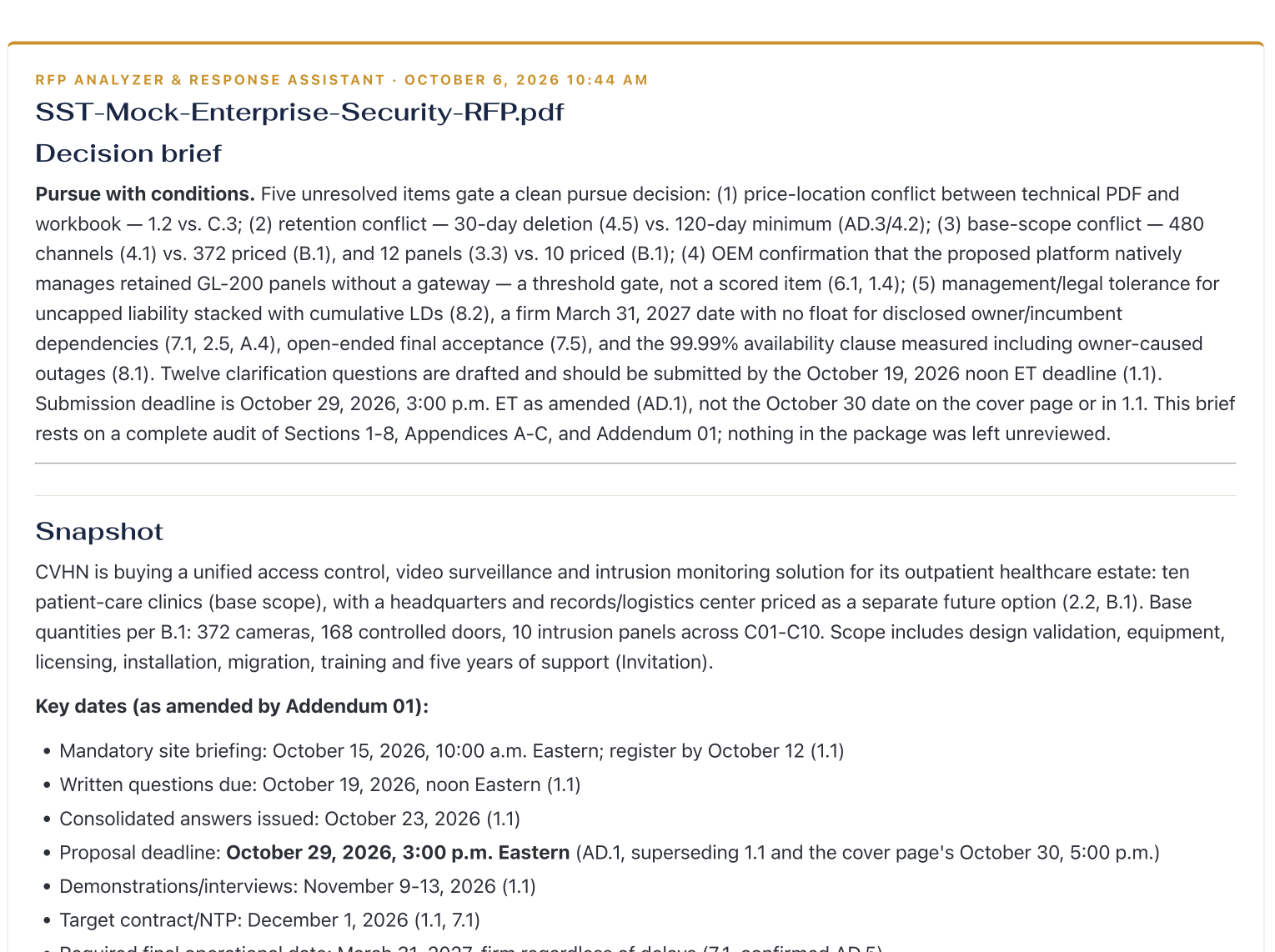
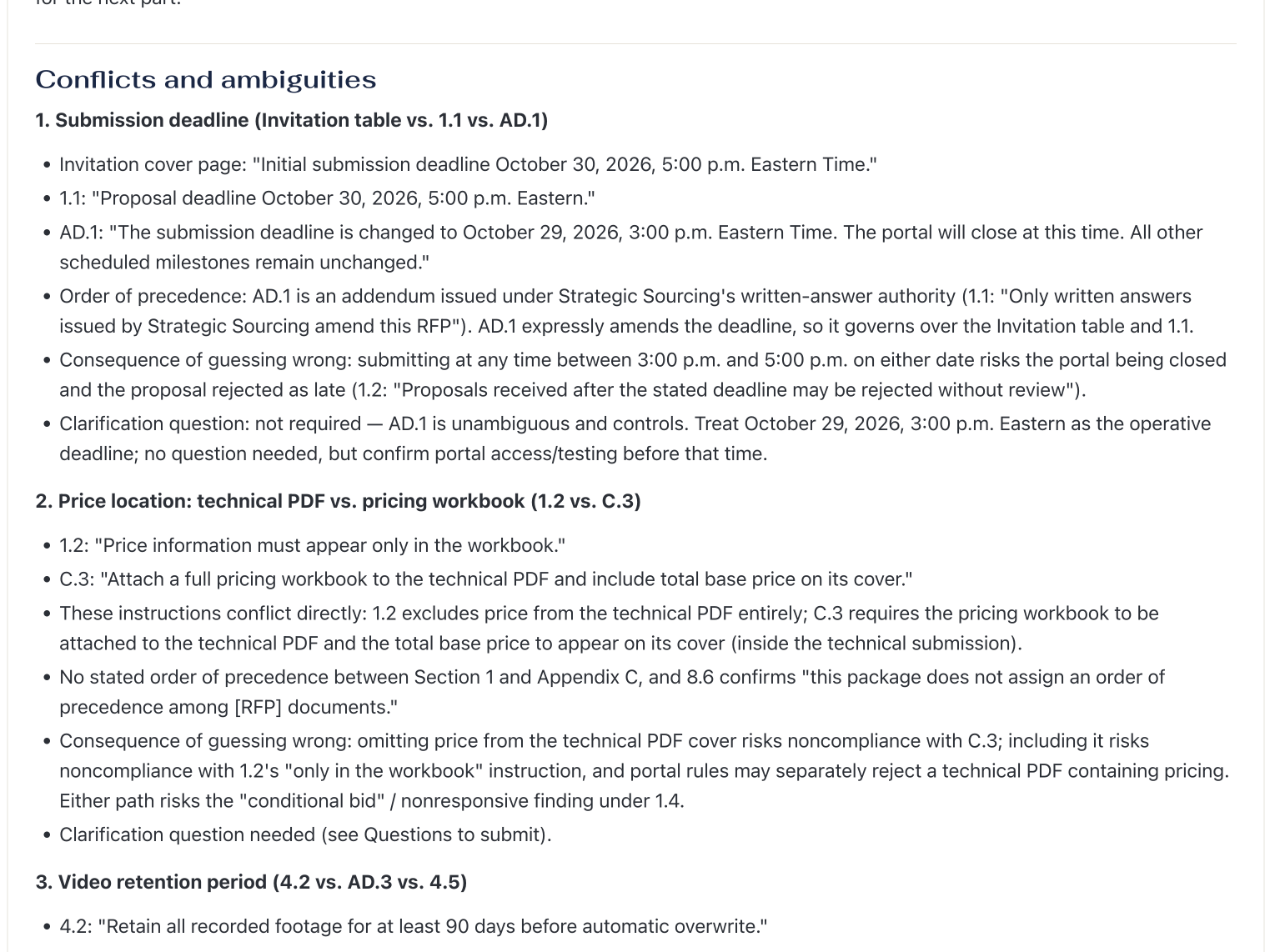
It reads the entire RFP package, including every section, appendix and addendum. It finds what a rushed read misses: requirements, conflicts between sections, traps and the questions to submit before the deadline. Then it gives a bid/no-bid read and a response strategy.
- the RFP (PDF, Word or text);
- what you bring (certifications, manufacturers, comparable projects);
- what you know beyond the document (incumbent, who wrote the spec, what triggered the RFP).
Optional: a response outline, or draft answers to the sections you choose.
- a one-page decision brief at the top;
- a snapshot with the key dates;
- how the buyer will choose;
- a numbered requirements register;
- conflicts and ambiguities, each with the clause numbers and the consequence of guessing wrong;
- traps and risks;
- clarification questions ready to submit;
- the bid/no-bid read;
- a response strategy;
- a consistency check of its own report.
The full run takes about seven to ten minutes.
RFPs are lost on details: a superseded deadline, a pricing instruction that contradicts another section, a requirement buried in an addendum. The analyzer reconciles all of it before the rep commits days of proposal work, and it surfaces the questions while there’s still time to ask them.
Find out why your proposal would lose, before the buyer does.
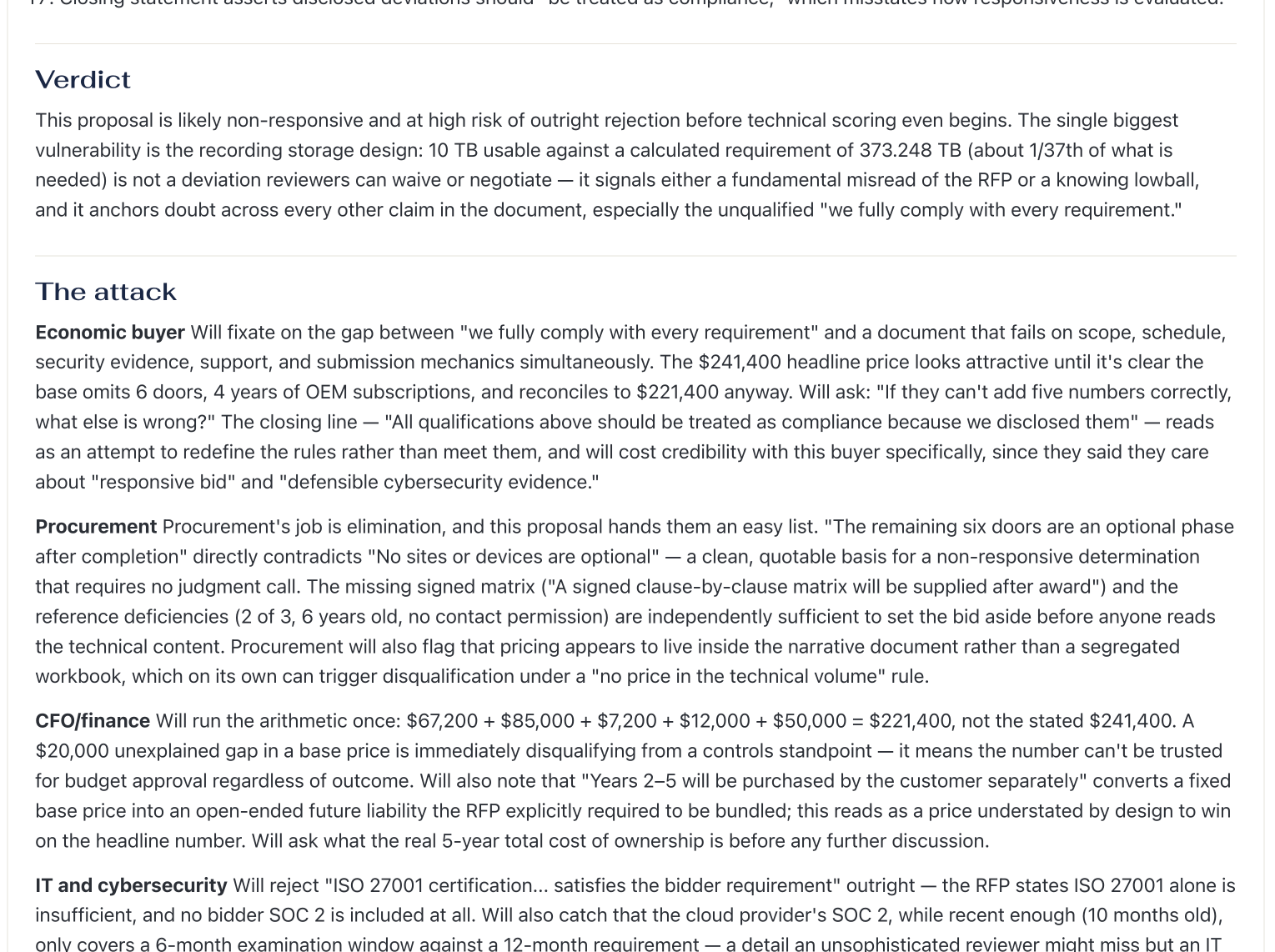
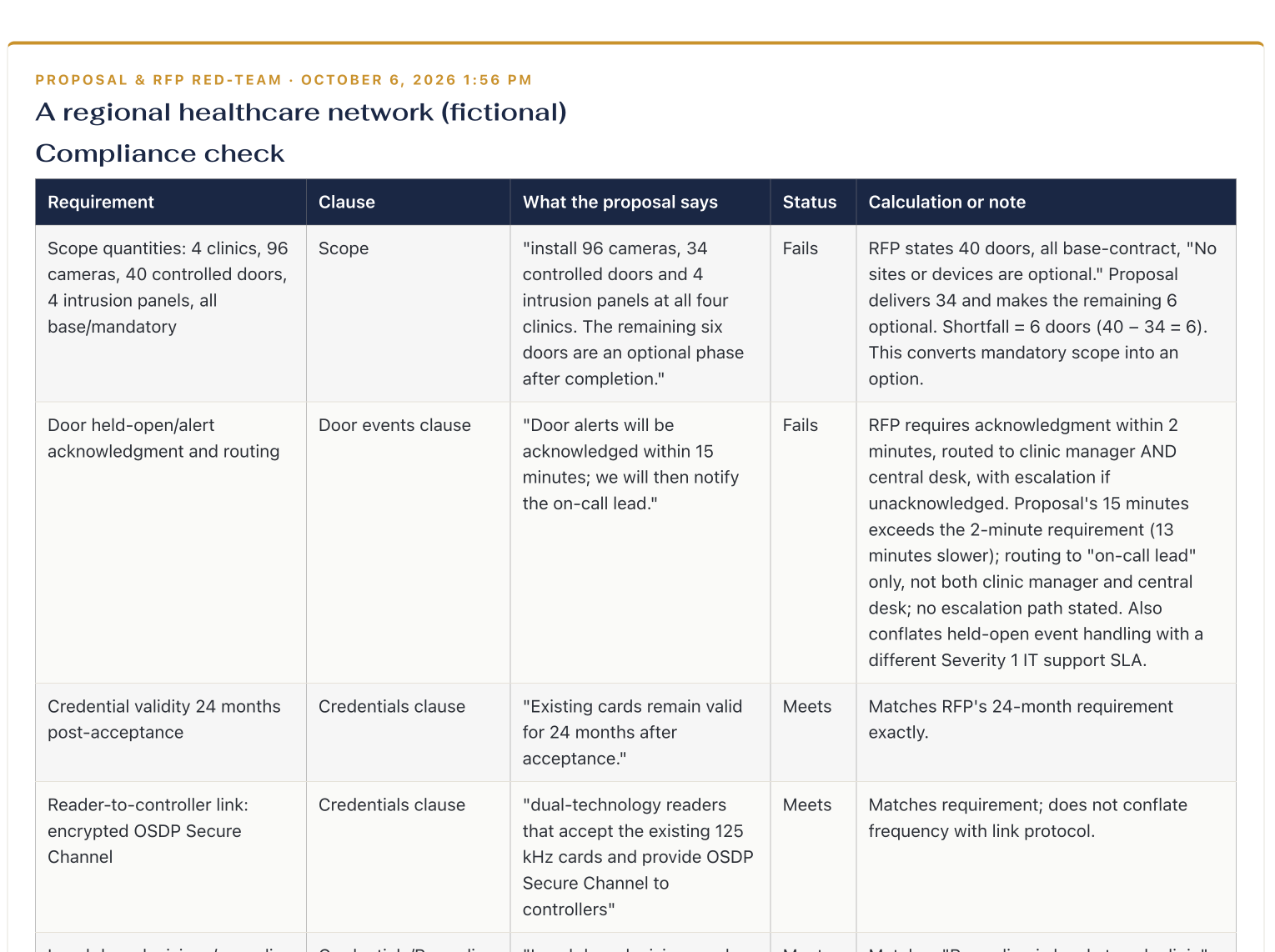
Before you submit, it attacks your proposal from every reviewer’s seat: the economic buyer, procurement, the CFO, IT and cybersecurity, the consultant and your strongest competitor. It checks compliance line by line, then shows how to fix each weakness honestly.
- your draft proposal or RFP response (upload or paste);
- the RFP or requirements it answers;
- what the buyer cares about;
- the competition and the incumbent.
- a line-by-line compliance check (Meets or Fails, with the math);
- a verdict;
- the attack from each reviewer;
- vulnerabilities, ranked;
- specific fixes;
- a list of claims to verify or remove.
It runs in four to seven minutes.
A proposal can look complete to the person who wrote it and still be non-responsive: a scope shortfall, a service level that misses the requirement, a total that doesn’t add up. Procurement’s job is to eliminate bids. The red-team finds the reasons first, while they can still be fixed.
Turn an account name into a reason to reach out.
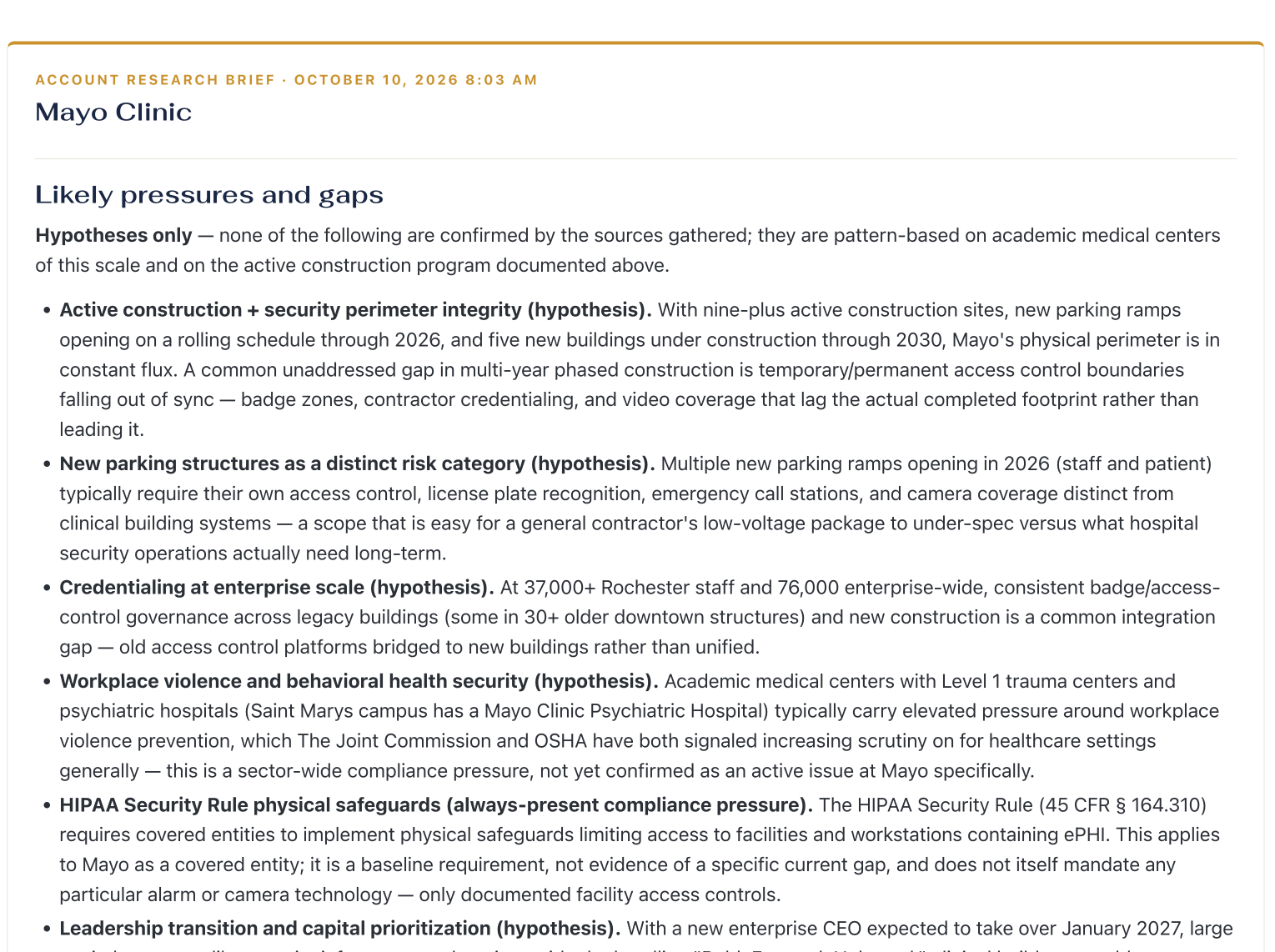
It searches current public sources: the organization’s own site, news, expansions, construction, leadership changes and incidents. It turns what it finds into a pre-prospecting brief. Each fact is sourced and dated, and every inference is labeled as a hypothesis.
- the organization name;
- city and state;
- its website and vertical, if known;
- what you sell.
- a snapshot;
- recent signals that could be triggers, each dated;
- likely pressures and gaps;
- who probably decides;
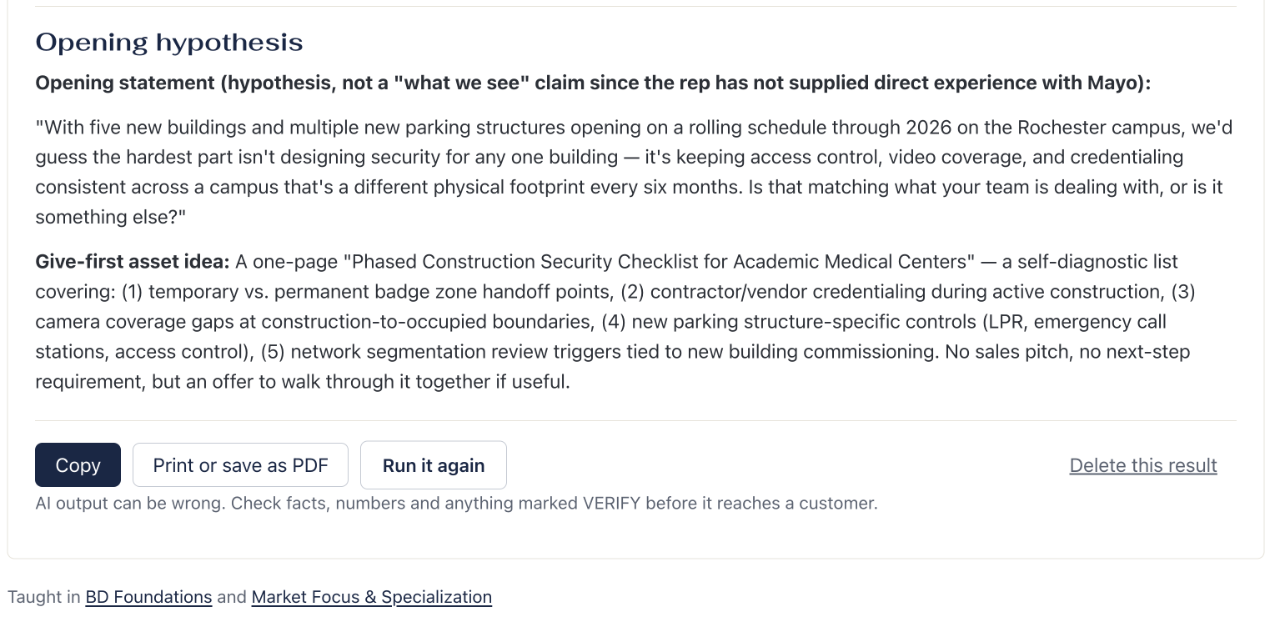
- an opening hypothesis, plus a give-first asset idea;
- what to confirm before first contact.
It takes a minute or two.
Trigger-led outreach starts with knowing what changed at the account. The brief finds the triggers (in the sample, a multi-year campus construction program) and turns them into a specific opening statement and a useful asset to offer first. The rep starts from a reason the buyer already cares about, instead of a generic introduction.
Not 25 generic questions. The three to five that matter.
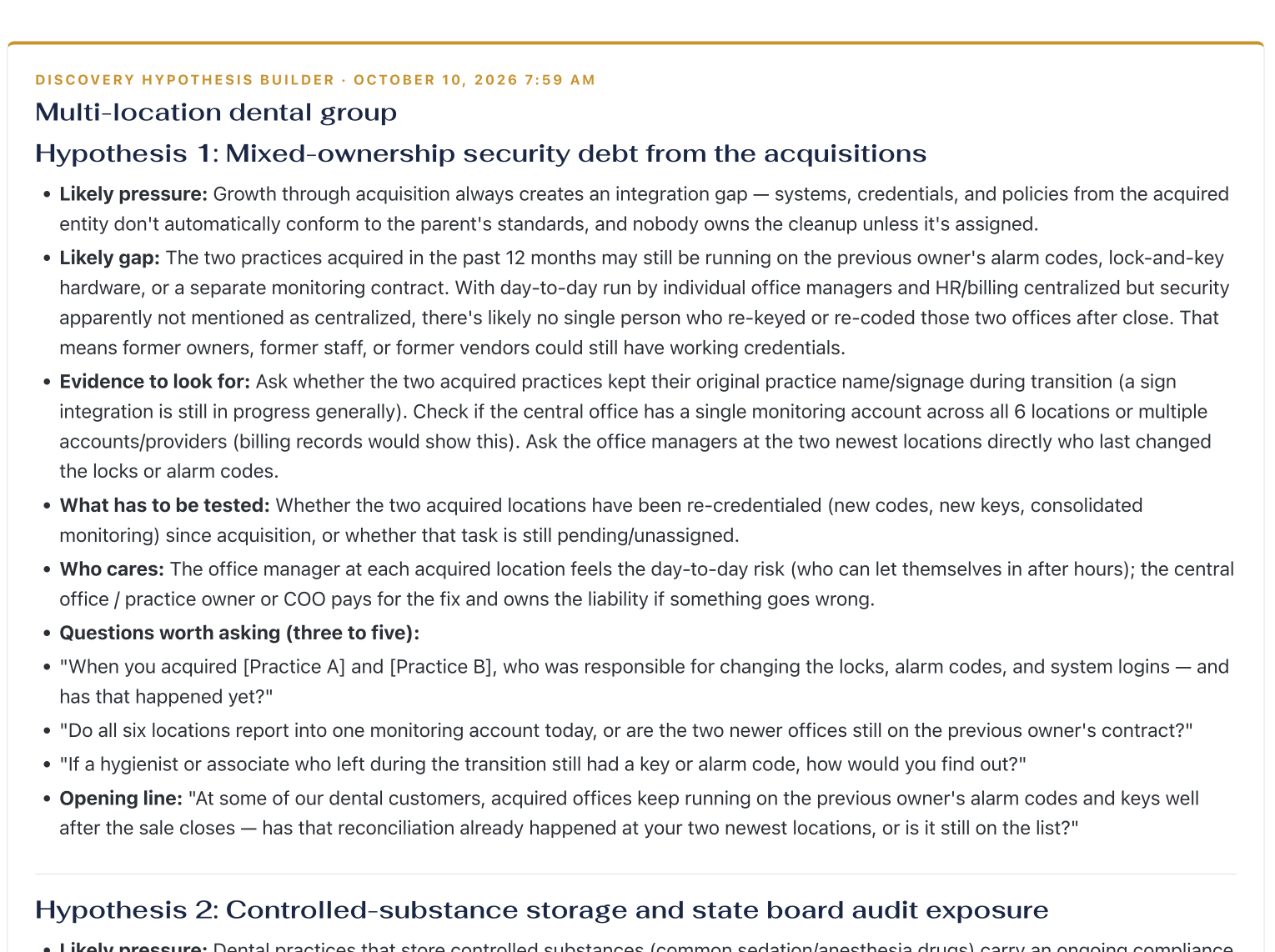
From a short description of the account, it builds two or three discovery hypotheses, most likely first.
- the vertical;
- a description of the account;
- what you sell;
- anything you already know (current provider, what you see at similar customers, a regulation).
Each hypothesis comes with:
- the likely pressure;
- the likely gap;
- the evidence to look for;
- what has to be tested;
- who cares and who pays;
- three to five questions worth asking;
- an opening line.
It ends with the best first move and a give-first asset.
It runs in under a minute.
Reps who walk in with a question list sound like everyone else. A hypothesis gives the rep a specific, testable point of view, so the first conversation sounds like expertise, and the buyer either confirms the gap or corrects it.
Walk in with a hypothesis, not a blank page.
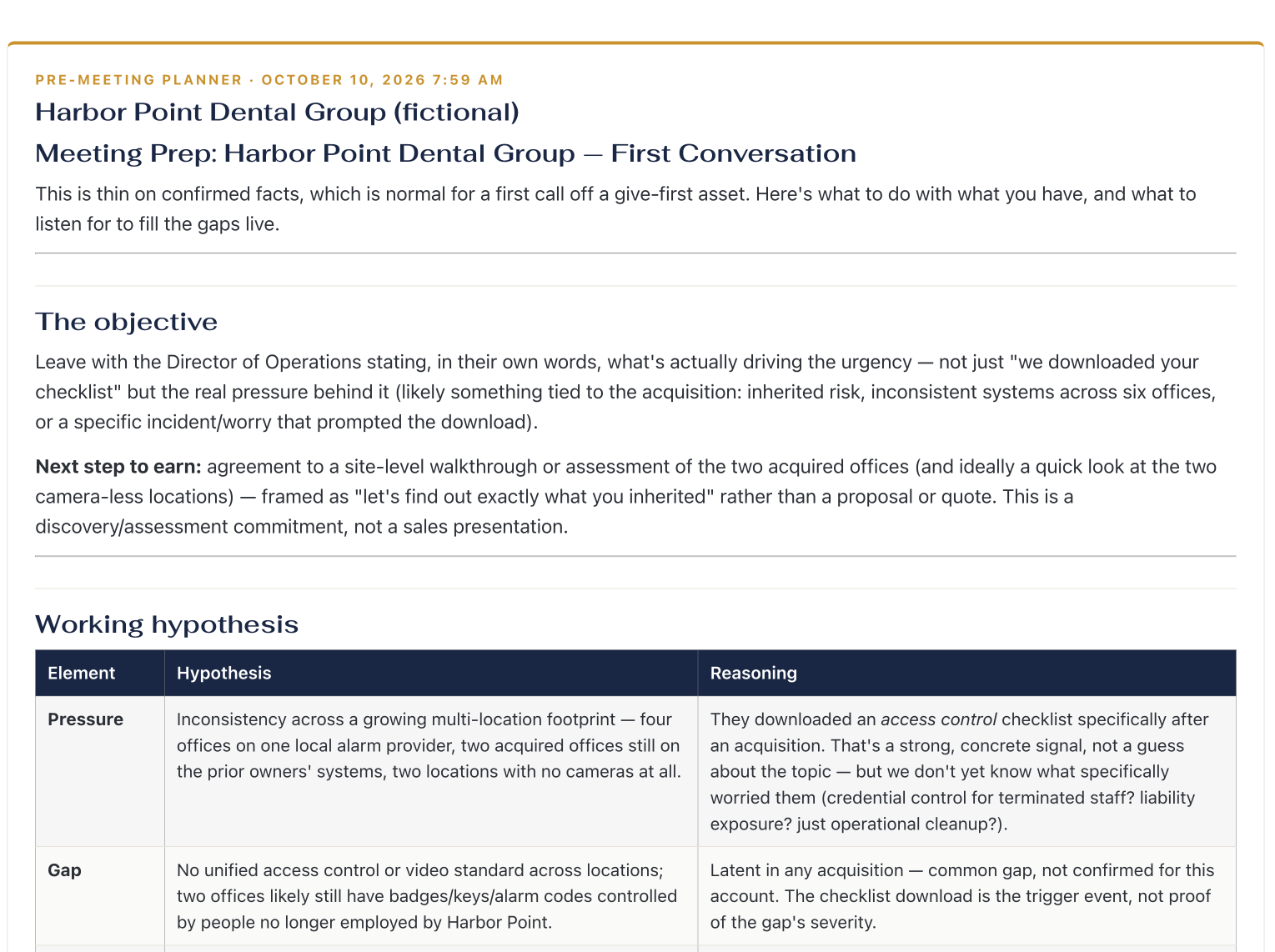
It prepares the rep for a first conversation, a virtual or on-site walk, a design review or a committee presentation.
- the account and vertical;
- the meeting type;
- who you’re meeting;
- how the meeting came about;
- what you know so far.
- the objective and the next step to earn;
- a working hypothesis;
- the two likely buying motives, and how to tell them apart;
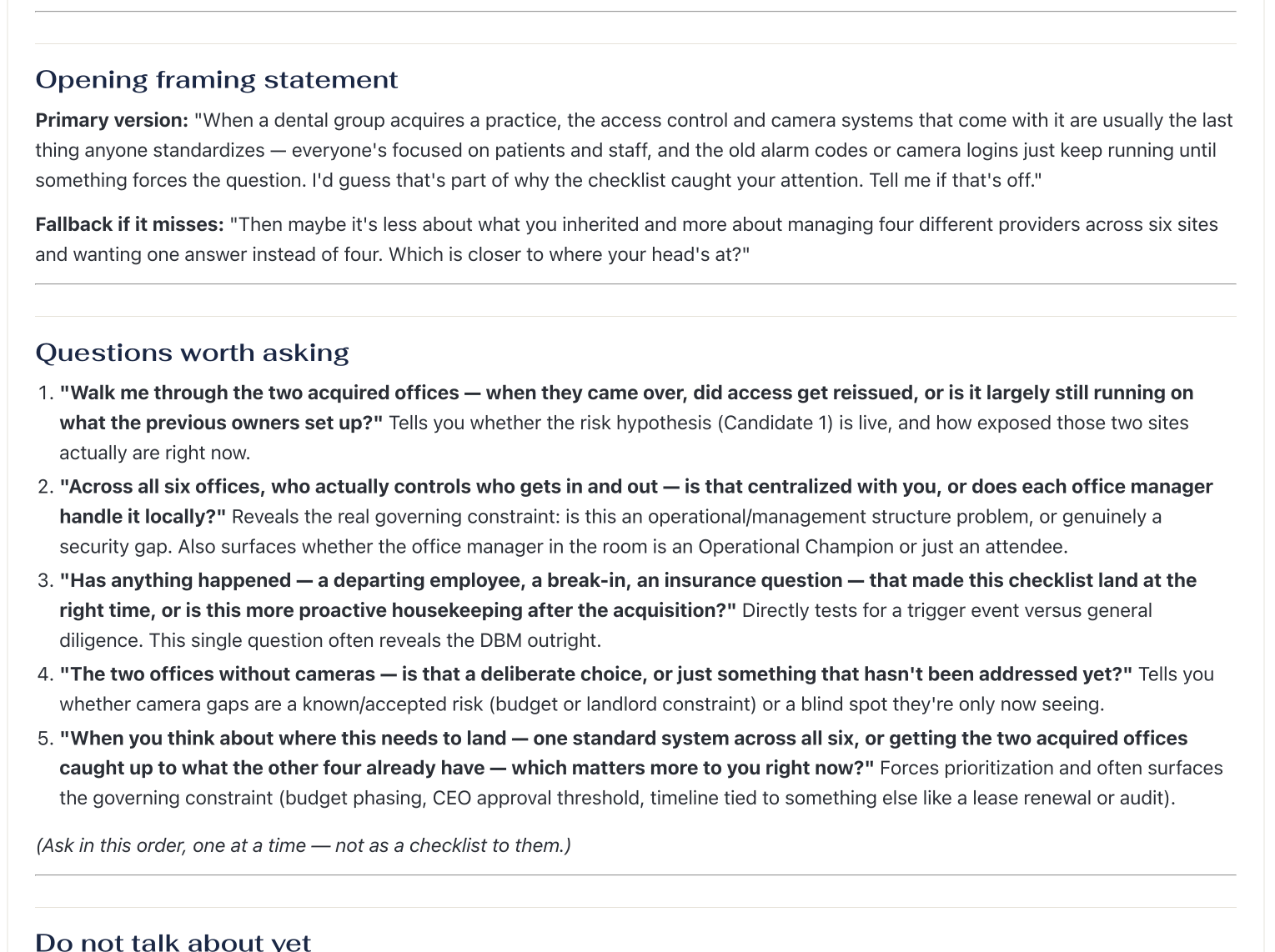
- an opening framing statement, with a fallback;
- three to five questions in order, each with what the answer tells you;
- what not to talk about yet, and what to say if the buyer asks;
- the people: who’s in the room and who’s missing;
- signals to listen for;
- how to propose the next step.
It runs in under a minute.
The first five minutes decide whether the buyer sees a specialist or a vendor. The planner gives the rep the opening statement and the few questions that move the deal. It also tells the rep what not to bring up yet, such as products and price, so the meeting doesn’t collapse into a comparison.
See where your deal is single-threaded before it costs you.
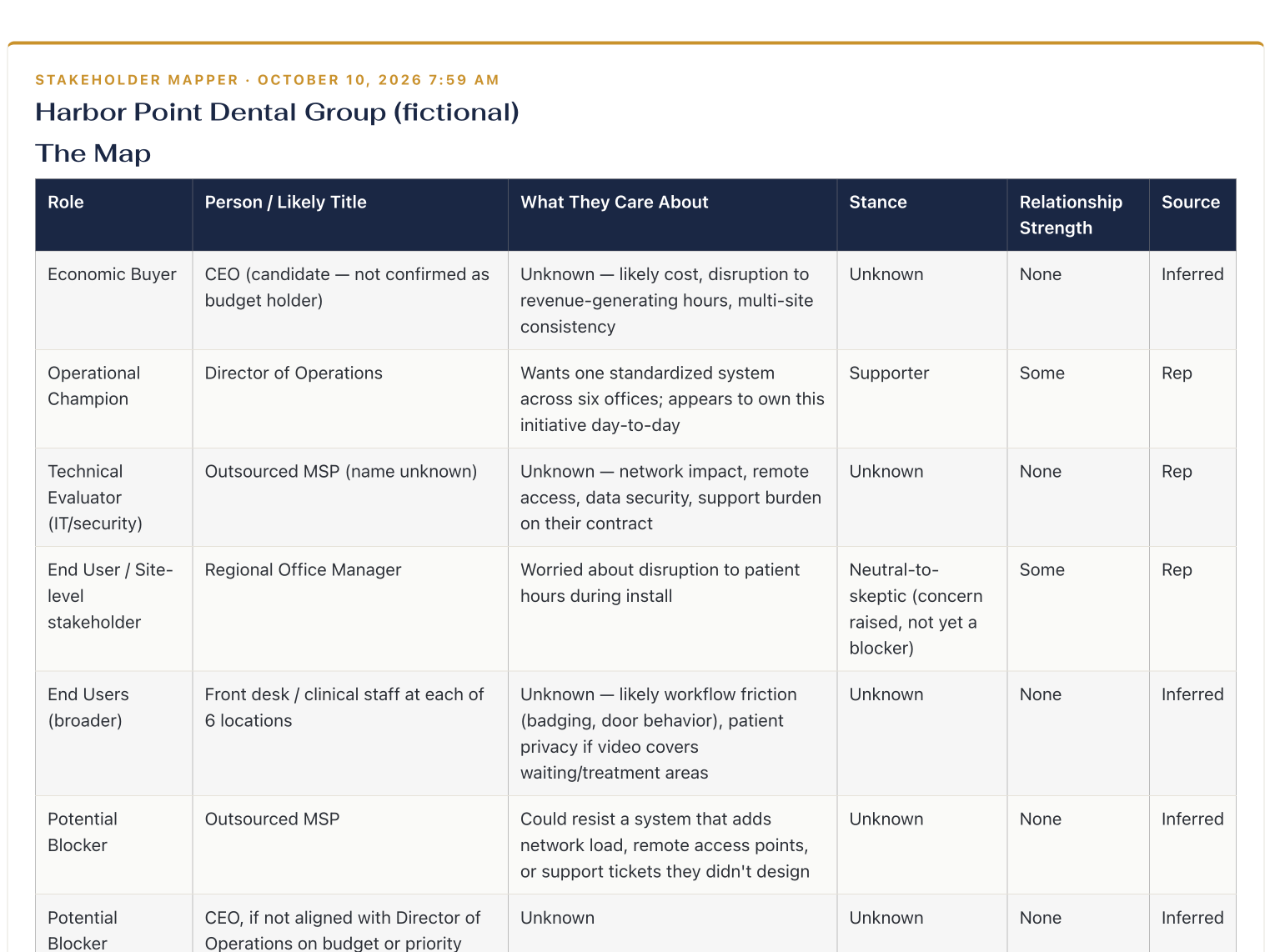
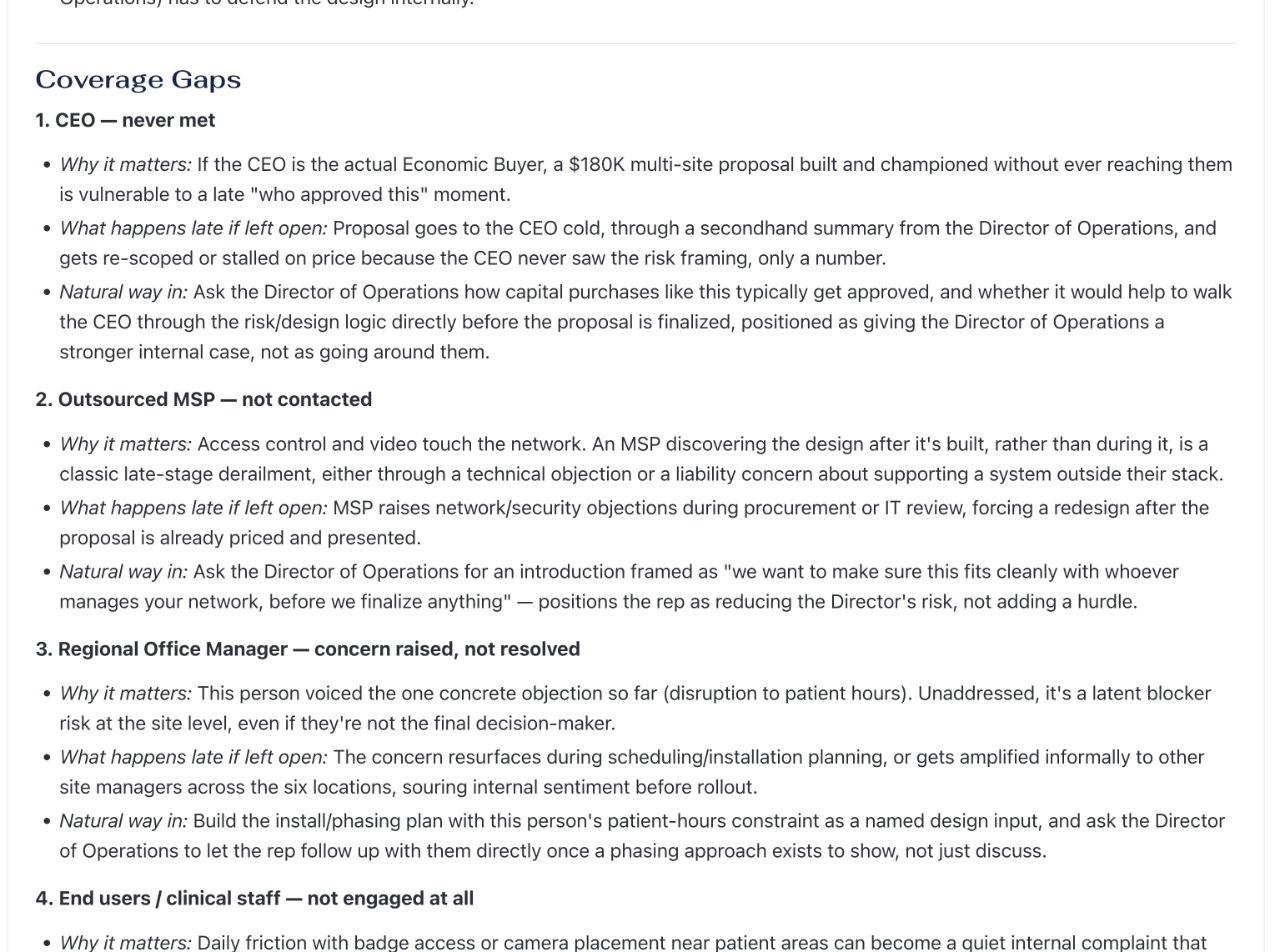
It maps who decides, who evaluates, who champions and who can block. That includes the hidden governance that never comes to meetings: ownership groups, IT providers, landlords and insurers. Then it shows each coverage gap and a natural way to close it.
- the account and vertical;
- what’s being bought;
- the people involved so far, and where each one stands.
Optional: a web search for public leadership.
- the stakeholder map (role, person or likely title, what they care about, stance, relationship strength, source);
- hidden governance;
- coverage gaps, each with why it matters, what happens late if it stays open, and how to reach that person;
- a risk read;
- the next three moves.
It runs in under a minute.
Deals with one supportive contact die late, when the CEO, the IT provider or procurement shows up for the first time. The mapper names who’s missing while there’s still time to bring them in, and gives a way in that the champion will welcome.
Turn raw meeting notes into the next move and a follow-up worth sending.
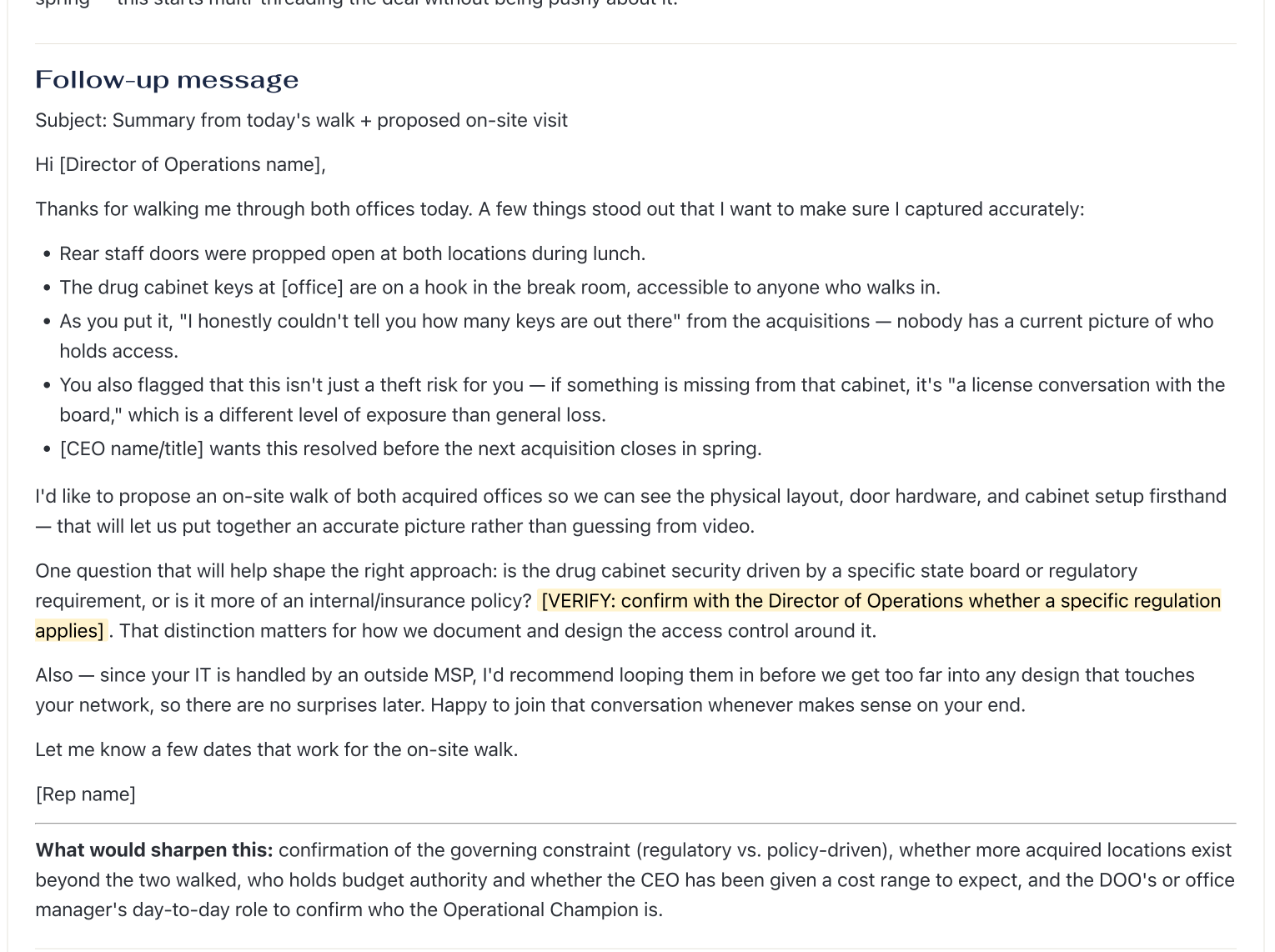
Within a day of a meeting, the rep pastes what happened. The tool separates what moved from what didn’t, names the biggest risk, recommends the best next move and writes the follow-up email.
- the account;
- the meeting type;
- your notes, as raw as you like;
- what the buyer said in their own words;
- the next step, if one was agreed.
- what moved;
- whether the buying motive is confirmed in the buyer’s words;
- what didn’t move;
- what’s still unknown;
- the biggest risk;
- who needs to be involved;
- what not to do;
- the best next move;
- a ready-to-send follow-up email that recaps the meeting in the buyer’s language, with anything to check marked VERIFY.
It runs in under a minute.
Most follow-ups say “just checking in.” This one plays the buyer’s own words back to them and adds something useful. It also tells the rep the tempting move that would hurt the deal, like sending a quote before the design is agreed.
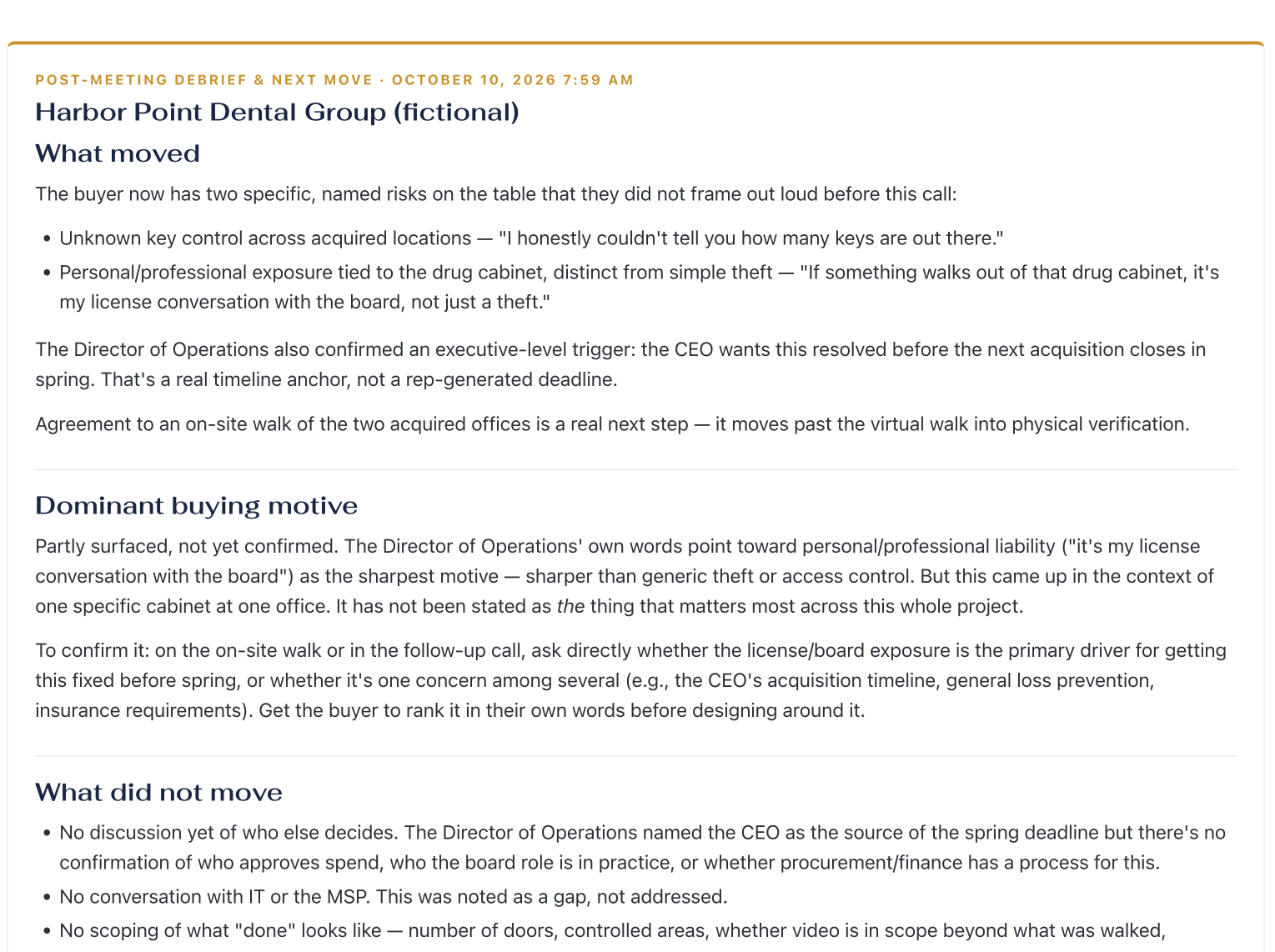
Inspect a deal the way a strong sales manager would.
It audits an opportunity against SST’s inspection standard: what is confirmed, what is assumed and what is missing. Optimism doesn’t count, and a constraint described only in the rep’s words isn’t confirmed. Reps use it before a pipeline review; managers run it as a pre-read.
- the deal stage and value;
- the governing constraint;
- stakeholders and the approval layer;
- the shared picture;
- the competitive position.
- a one-sentence readiness call;
- a scorecard across six dimensions (Confirmed, Partial or Gap, with the evidence and what’s missing);
- the sharpest question a manager should ask for each gap;
- a forecast read;
- three actions before the next review.
It runs in under a minute.
Forecasts miss because deals are rated on hope. The audit separates evidence from optimism, so the rep fixes the gaps before the review instead of explaining them during it.
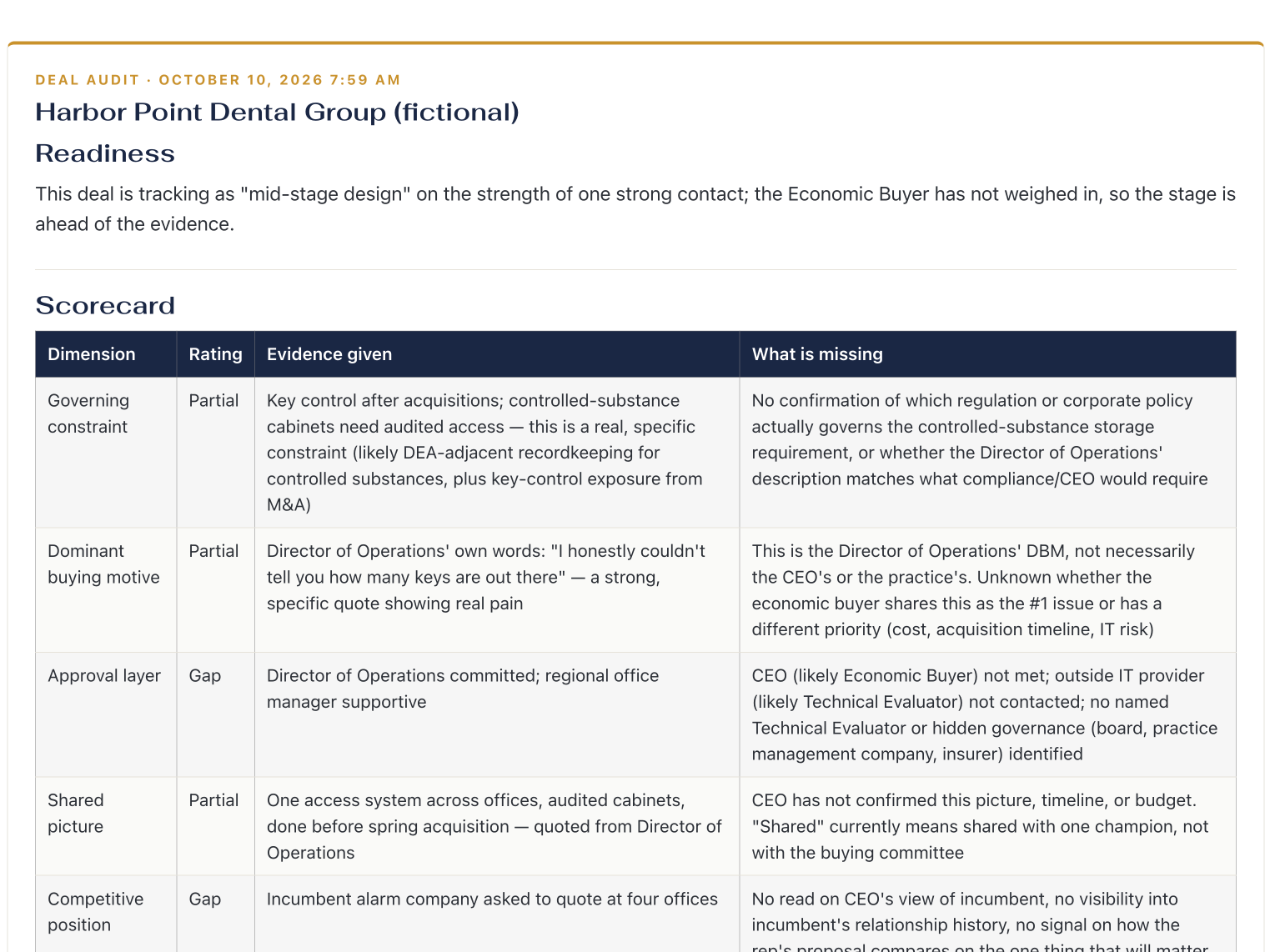
Spend your time on the deals you can win.
It decides whether an opportunity deserves the rep’s time. The verdict is Pursue, Pursue with conditions, Nurture or Walk away, with the reasons.
- the opportunity;
- access to the decision maker;
- how significant the problem is to the buyer;
- the incumbent;
- the timeline and what drives it;
- budget;
- competition;
- RFP status and your influence on the spec;
- technical fit;
- the next step.
- the verdict;
- a scoring table across eight factors;
- what would change the verdict and how to learn it fast;
- conditions with a date, if the verdict is conditional;
- the cost of chasing, and if the answer is walk away, how to exit and keep the door open.
It runs in under a minute.
The most expensive deals are the ones a rep was never going to win: a cold RFP, no access to power, a budget that doesn’t exist. Go / No-Go makes that call early and honestly.
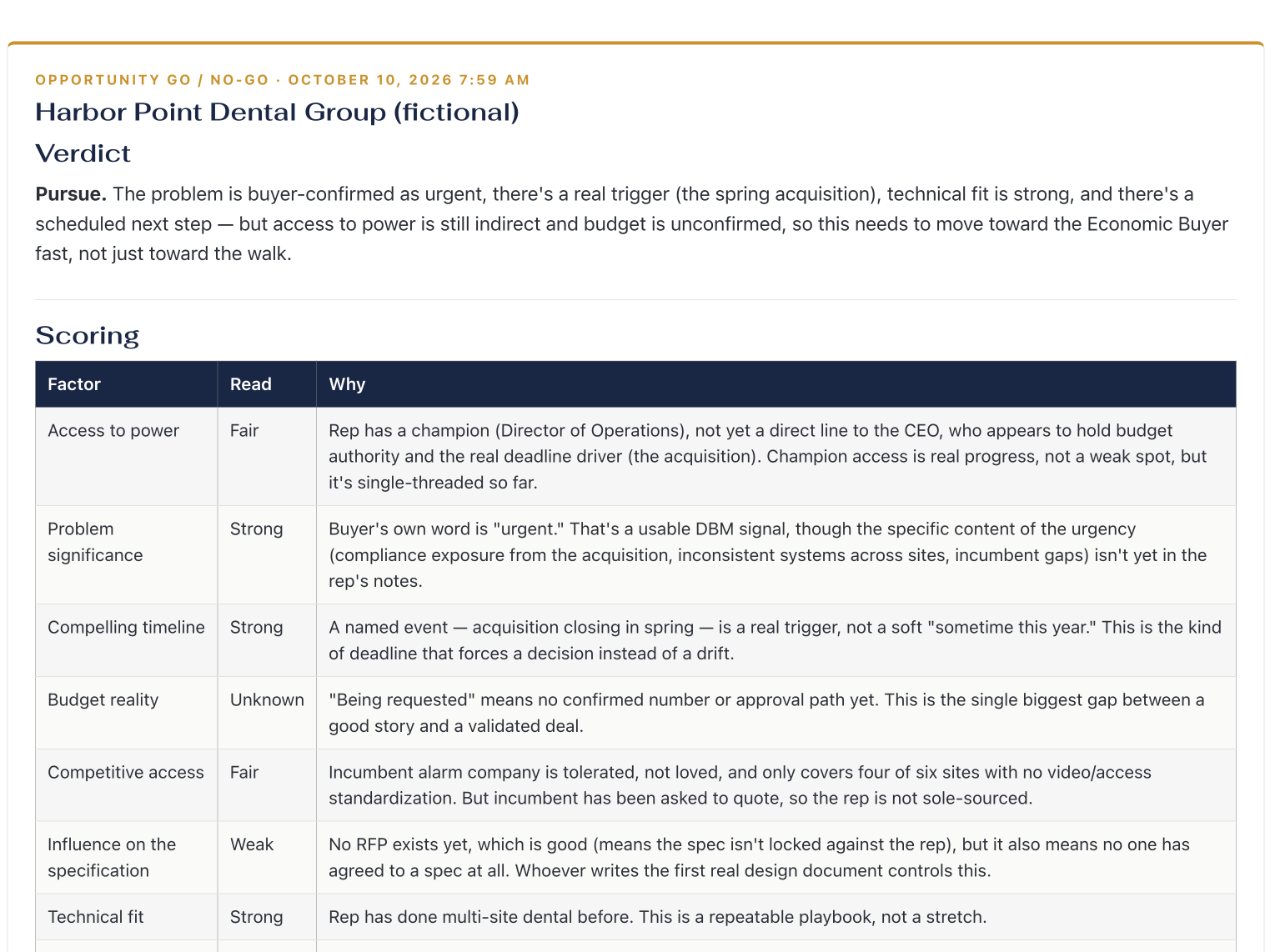
Rehearse the first conversation with a buyer who reacts like a real one.
The rep practices a first conversation with a realistic buyer, typing their side as the rep. The buyer reacts to exactly what the rep says:
- a specific, well-framed statement earns engagement;
- stacked questions, product pitches and early price make the buyer cooler.
A coach flags each slip as it happens. Type END for a debrief.
- the vertical;
- the buyer’s role;
- the buyer’s starting frame (sanity check, nothing is broken, exploring, comparing vendors);
- the current provider;
- who opens;
- the difficulty level;
- anything about the account.
- a live conversation with in-line coaching;
- on request, feedback on your last reply;
- at the end, a debrief: the pattern, strengths quoted in your own words, what to develop, the buyer’s motive in their words, and the next step.
Reps get better at first conversations by having them, and most practice happens in front of real buyers. The roleplay lets a rep make the mistakes where they cost nothing: the question volley, the early pitch, the price before the problem. The coach shows exactly what to say instead.
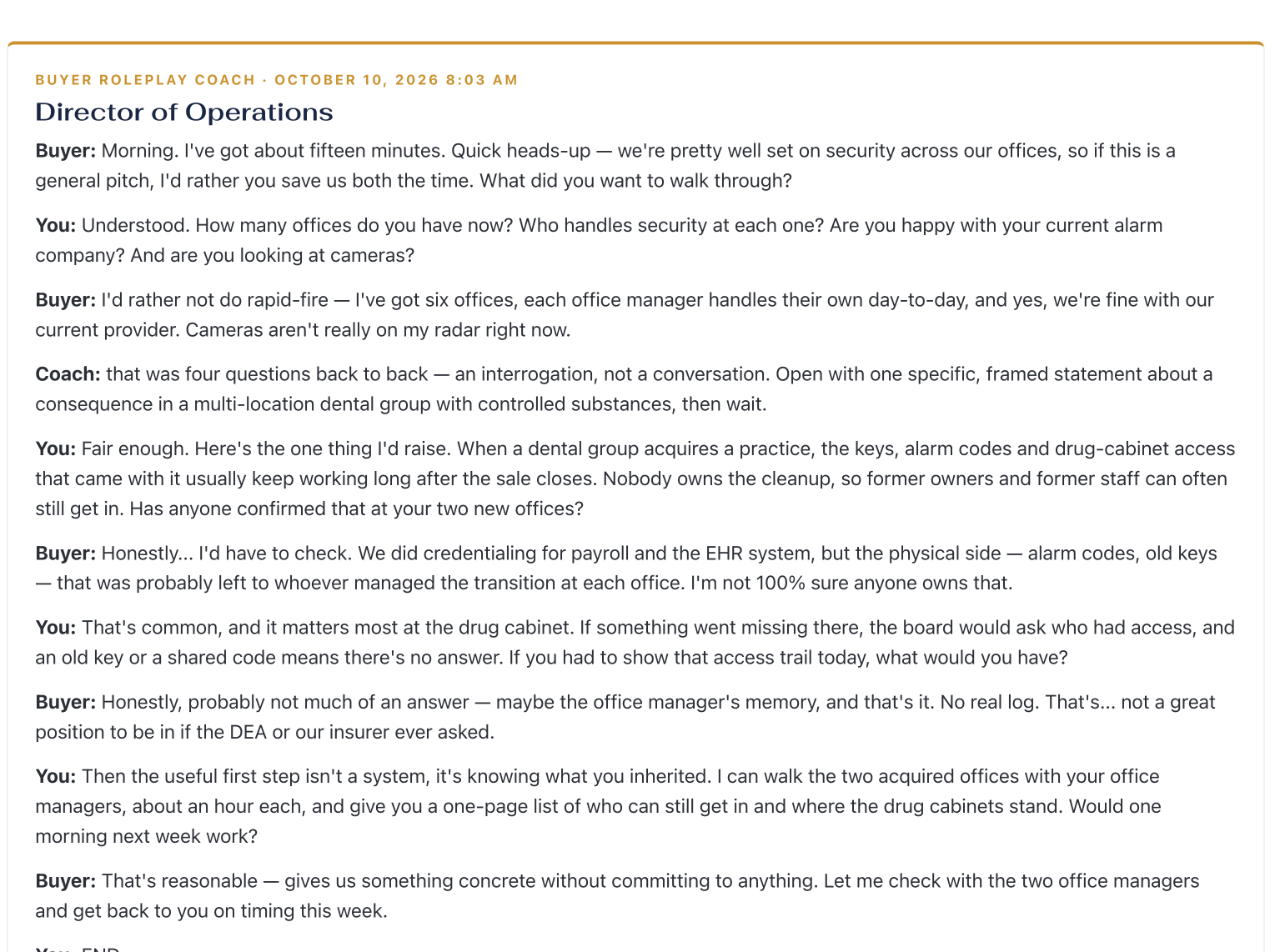
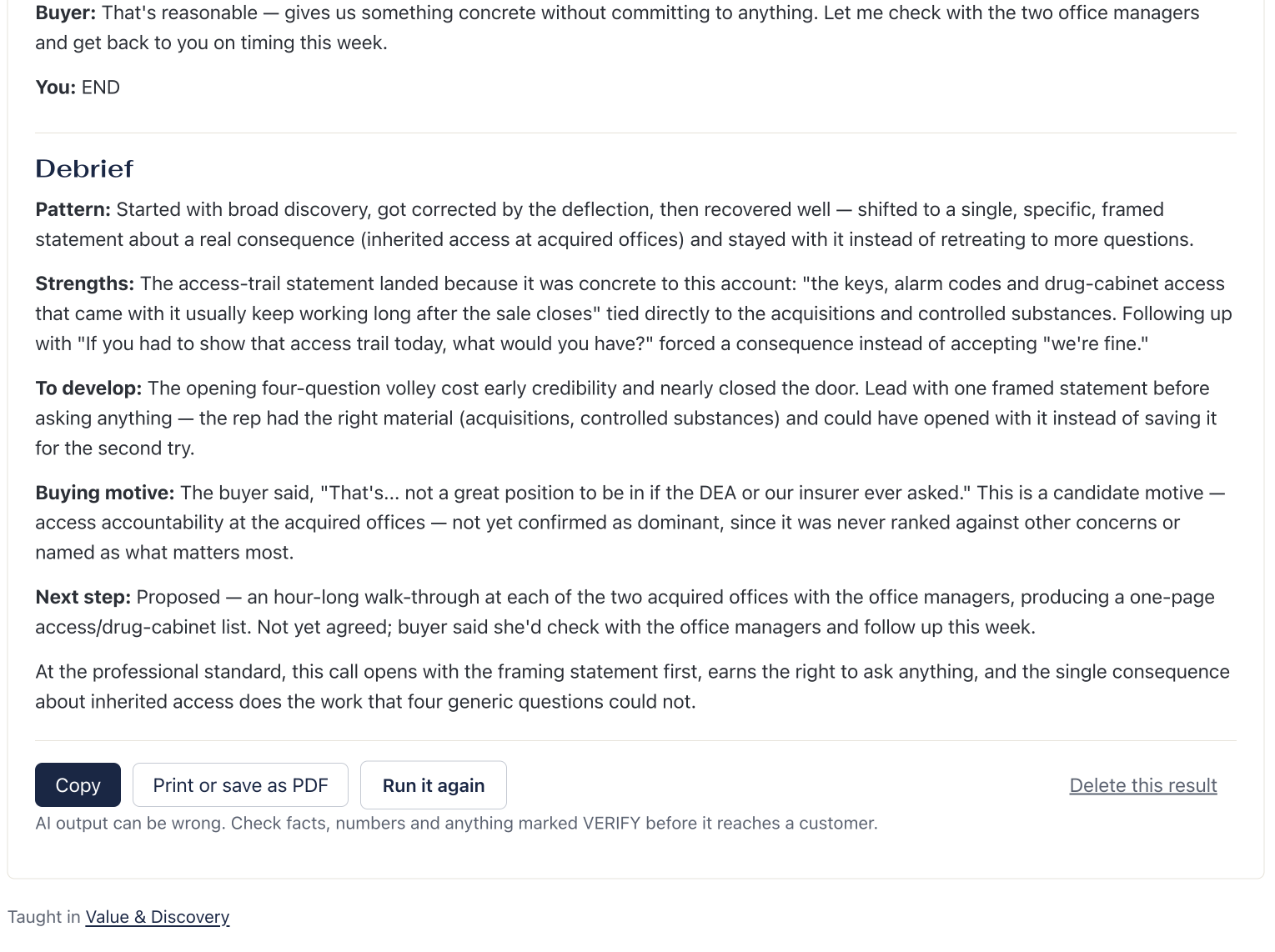
Screenshots are unedited outputs from the tools. Harbor Point Dental Group and the healthcare network are fictional accounts used for demonstration. The RFP is an SST mock RFP. The Account Research Brief uses live public sources; some sections are omitted from the screenshot.
AI output can be wrong. Every tool marks what to verify, and the rep checks facts before anything reaches a customer.
Use it on a real deal before you pay for it.
$99 a month after 14 days. Cancel anytime.